Travel is fatal to prejudice. – Mark Twain
In her 2009 TED talk African author Chimamanda Ngozi Adichie relates the effect of stereotypes. When her college roommate in Philadelphia heard that Ms. Adichie was from Nigeria, she assumed that her family lived in a village of grass huts without modern appliances and that she grew up listening to traditional tribal music. In fact, Adichie grew up on a college campus and listened to music from singers like Mariah Carey.
Many of us learned what little we know about ordinary life in Africa from old movies. Inaccurate information and unsubtle racism shaped those images, and not much has replaced them. I found myself confronting my own ignorance on this trip. I’d like to present more recent images in case you, too, would like an update.
The city of Maun in Botswana has about 55,000 people, large enough for nearby villages to have become suburbs. I don’t know the name of this village that we drove through on the outskirts of Maun, but a simple drive was enlightening. The village has brick homes, a brick school, cars, power lines, planned streets, fenced yards, infrastructure in place. There are also homes built with cinder block, which I suspect stays fairly cool in African heat, and some built with corrugated metal, which wouldn’t stay as cool. There is one traditional round hut (at :30-:33). All of the other buildings are western in style.
Phone technology may leapfrog in parts of Africa. Cell phones were everywhere, and wifi was common, at least in our hotels. However, I didn’t see a lot of phone poles or wires, suggesting that parts of Botswana may skip landlines altogether. Solar water heaters were common. Solar power cells were not unusual. Not everyone had a car, but taxi service was readily available.
Cities like Swapkomund in Namibia showed more foreign influence. Namibia was colonized by Germany in the late 1800s and early 1900s, and evidence of that influence remains in placenames and architecture. Since the African nations have become independent, though, they have built on established infrastructure and emphasized local culture.
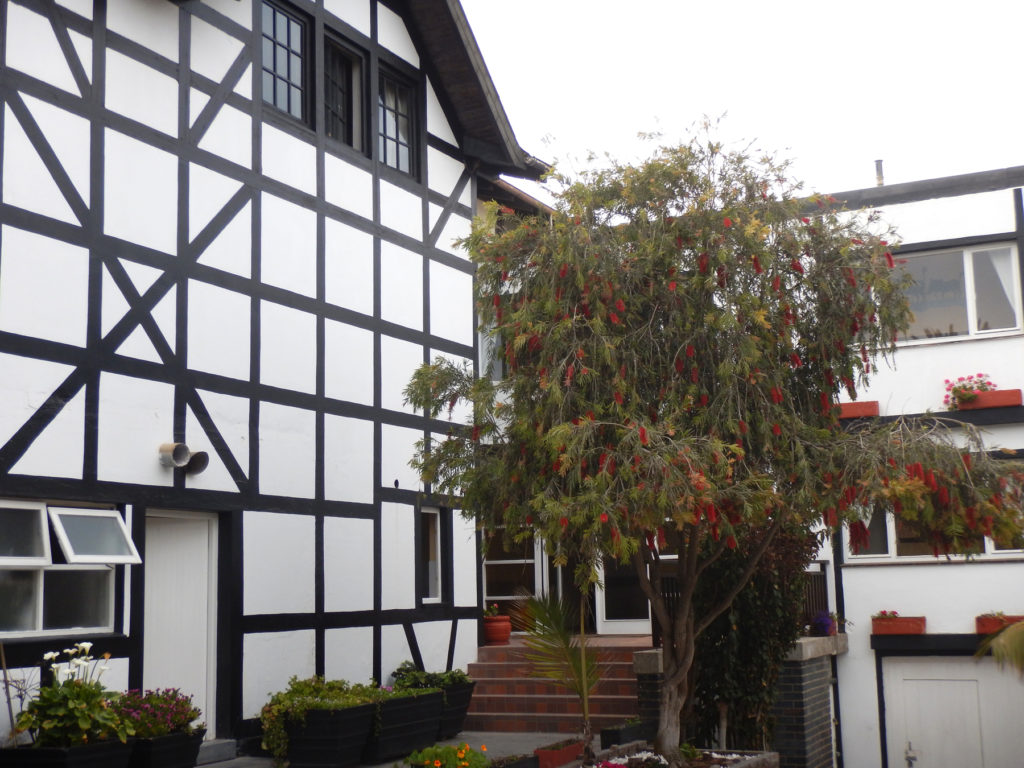
Outside the old part of the city – the historically white part of town – things are different. In the older part of “The Township” – the historically black part of town – established homes show the results of economic opportunity and growth.
This Herero woman (whose name I regret I didn’t get) welcomed us to walk through her home in the oldest part of The Township. The back door opened into the kitchen, with a beautiful glossy white tile floor and standard appliances – stove, refrigerator, and microwave. Her living room (and I assume the rest of the house – I didn’t snoop!) was well furnished, with curtains drawn against the heat of the day.
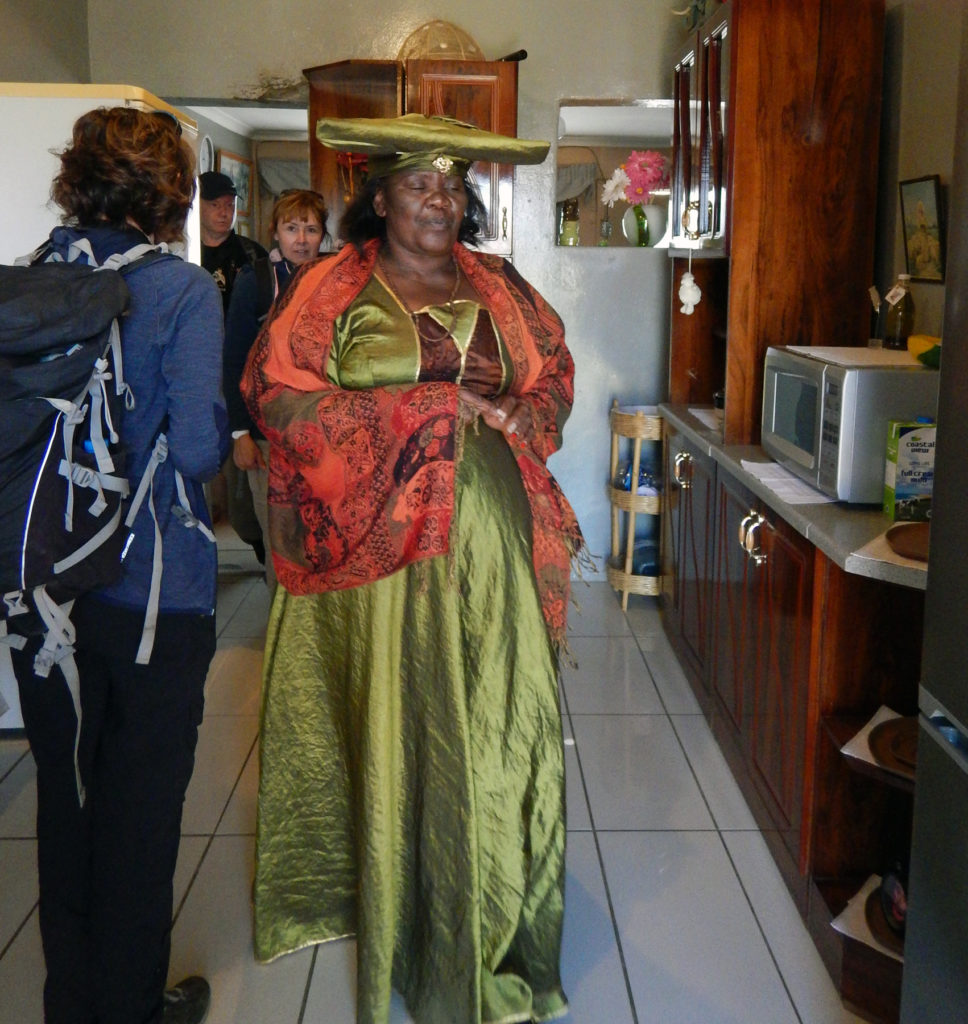
The Township is growing as more Namibians leave villages and smaller towns, looking for work. The Namibian government is trying to help people buy their own newer homes using a lottery system, but the need outstrips the program.
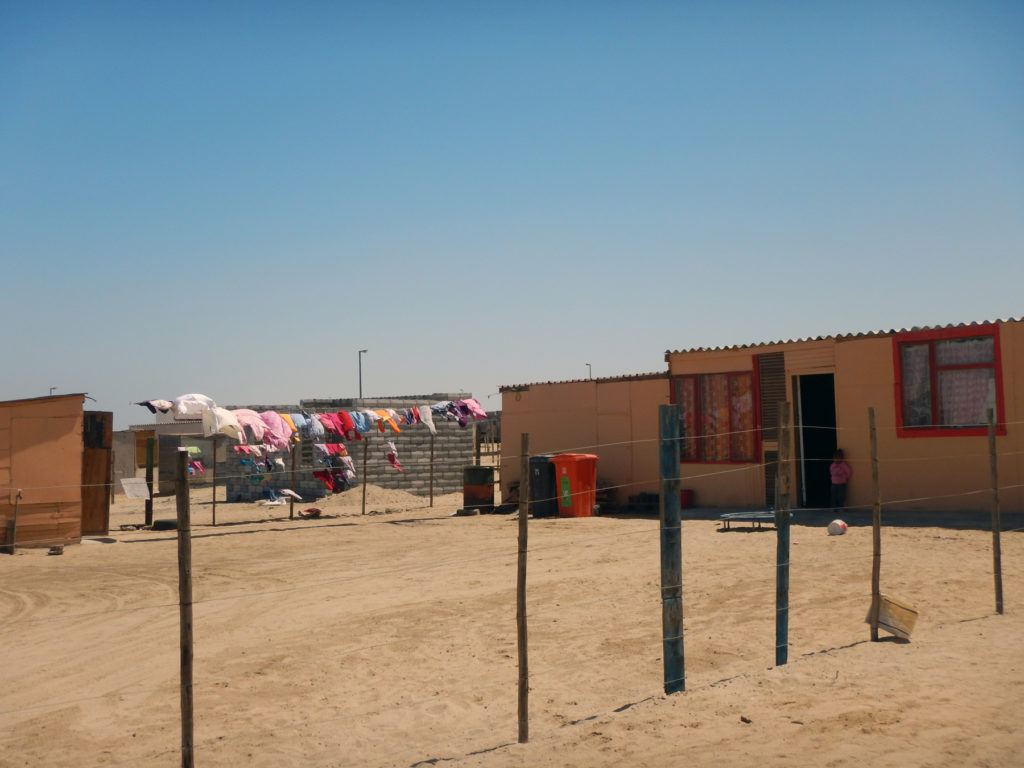
In the newest parts of The Township, people live in whatever they can find or build, working when they can, saving what they can, and waiting for each year’s annual lottery, hoping to upgrade. Entrepreneurship is the rule. Workers often have 2 or 3 jobs or a job and a small business. Winning the lottery doesn’t guarantee money; it guarantees help with financing a home.
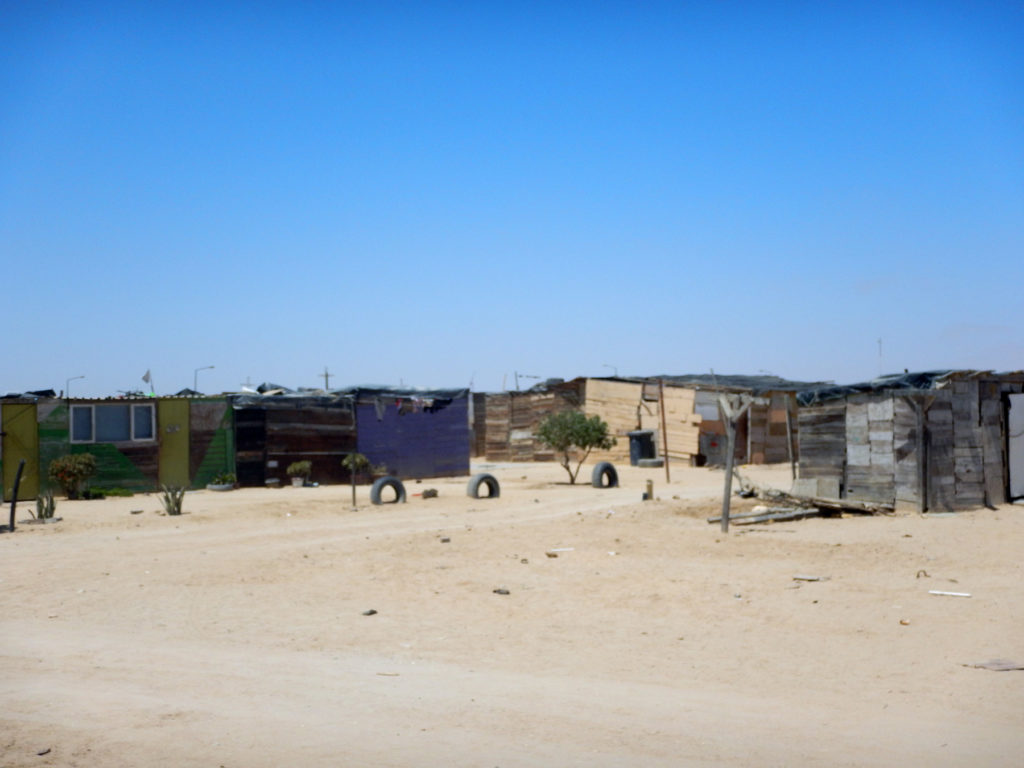
Third World poverty is real in Africa, but it’s not the only story. Grass huts are probably real in remote areas, but most people don’t live like that any more. Africa is working hard to educate its children, house its families, and develop economic opportunities for everyone. The growth is uneven, as it is everywhere, but it is real.