It’s vs. its

A relative who doesn’t own a computer asked to see photos from my trip to Africa. I’ve been pasting my blog posts into Word, printing, and mailing them. When I did that today, though, something unexpected happened.

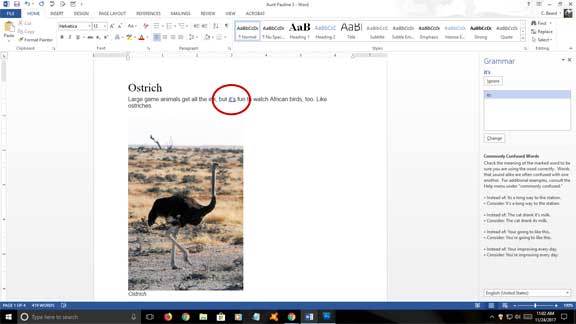
In this screenshot, a correct use of "it's" is flagged.
In this screenshot, a correct use of “it’s” is flagged.

In this screenshot, Word has flagged my (very correct!) use of “it’s” and has suggested, “Check the meaning of the marked word to be sure you are using the word correctly. Words that sound alike are often confused with one another.” Word included this example:

  • • Instead of: The cat drank it’s milk.
  • • Consider: The cat drank its milk.

I’m not going to touch Microsoft’s inventive use of punctuation and sentence structure there. And I understand that Word isn’t saying my writing is wrong – Word is encouraging me to double check my writing. Ordinarily I would be in favor of that. But there are a couple of problems.

First, there’s only one example for “it’s” and “its,” which means uncertain writers never see how to use “it’s” correctly.

Second, I have worked with classrooms full of students who don’t consider that their very expensive applications could mislead them. If Word flags something in their writing, the students assume it’s incorrect, change it, and move on. The implications for that kind of thinking (“the device is always right”) are frightening.

So I hope that teachers and parents are encouraging students to question the authority of the device.

And I return to my original plaint: why can’t Word tell the difference between “it’s” and “its” with greater accuracy?

Ostrich

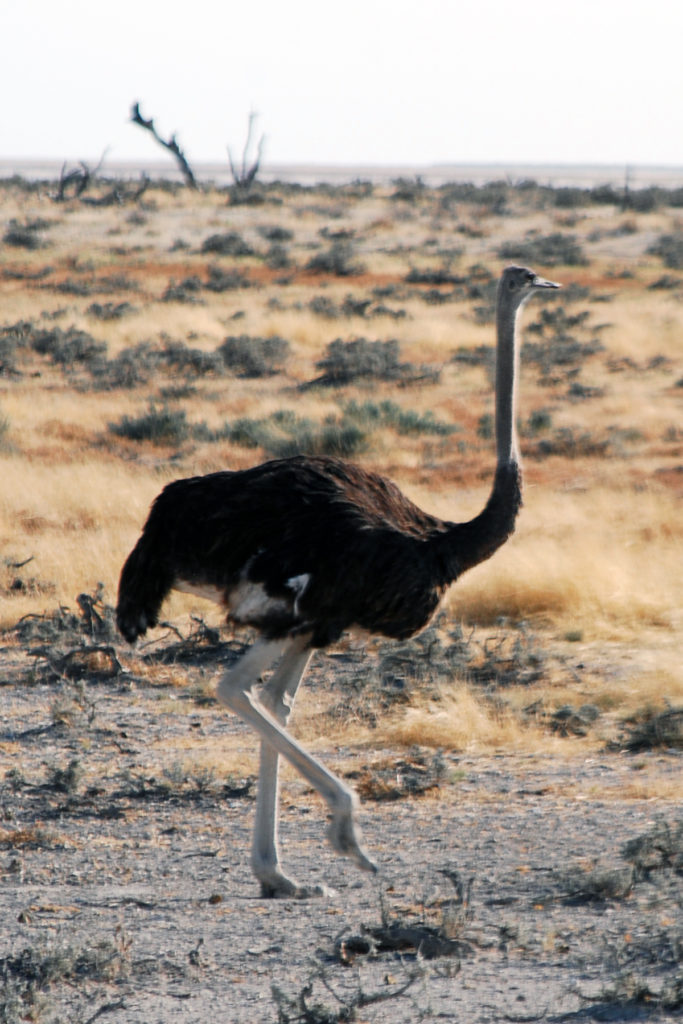
Large game animals get all the ink, but it’s fun to watch African birds, too. Like ostriches.

Ostrich
Ostrich

Ostriches travel in flocks, heads bobbing, knees bending backwards. Because they are so tall – they can grow to 8 feet – and so heavy – over 300 pounds – they can’t fly. Lack of flight doesn’t make them easy prey, though. They can run at speeds of 40 mph when startled, and they can generally outrun most predators. When they have to fight, though, they have a powerful kick. Their 4-inch talons can cause serious damage.

Another way ostriches avoid predators is to lie very still on the ground, with their legs under their dark body and their light-colored neck and head stretched out flat on the sandy ground. From a distance, the animal looks like a dark rock. This behavior has been inaccurately described as burying its head in the sand.

Ostriches have keen hearing and eyesight, which helps them avoid predators. They often travel with zebras, impalas, and other animals, sharing their diet of plants and bugs and serving as lookouts. When ostriches sense danger and run, the other animals notice and respond.

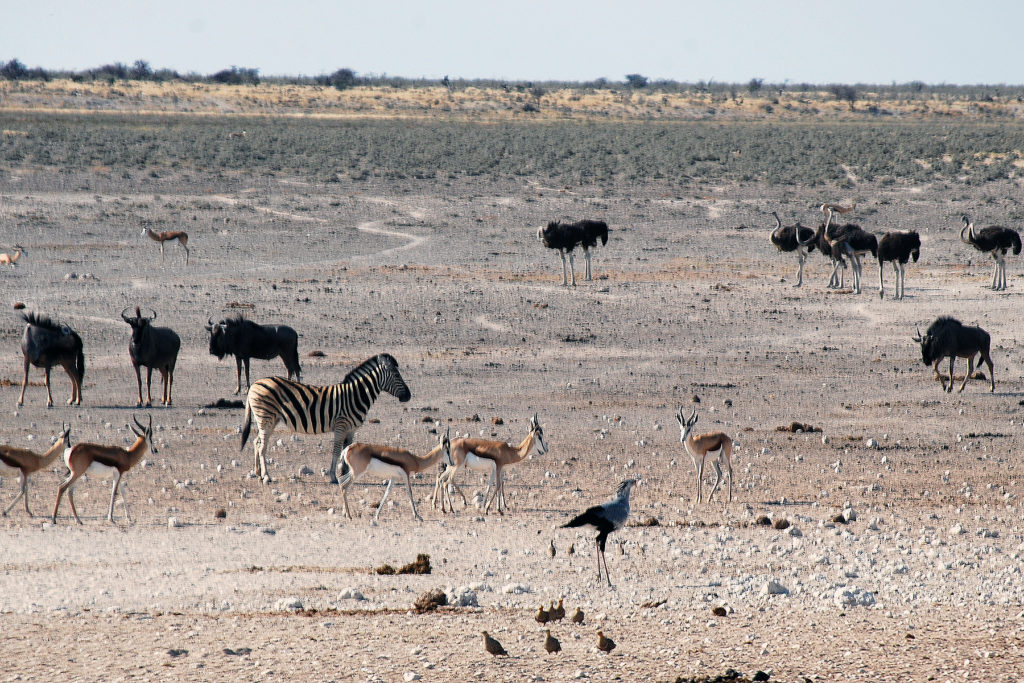
ostrich, secretary bird, zebras, cape buffalo, impala
At Etosha, Namibia: ostrich, secretary bird, zebra, cape buffalo, impala

It’s not easy to be an ostrich. Taller than everyone else, heavy, awkward in motion, with actions that are often misunderstood, ostriches are kind of dorky. But they’re good to those around them, alerting others to danger and otherwise minding their own business. Sounds like some people I know.

So be good to your dorky friends. They have their own unique beauty, and they deserve a little respect.

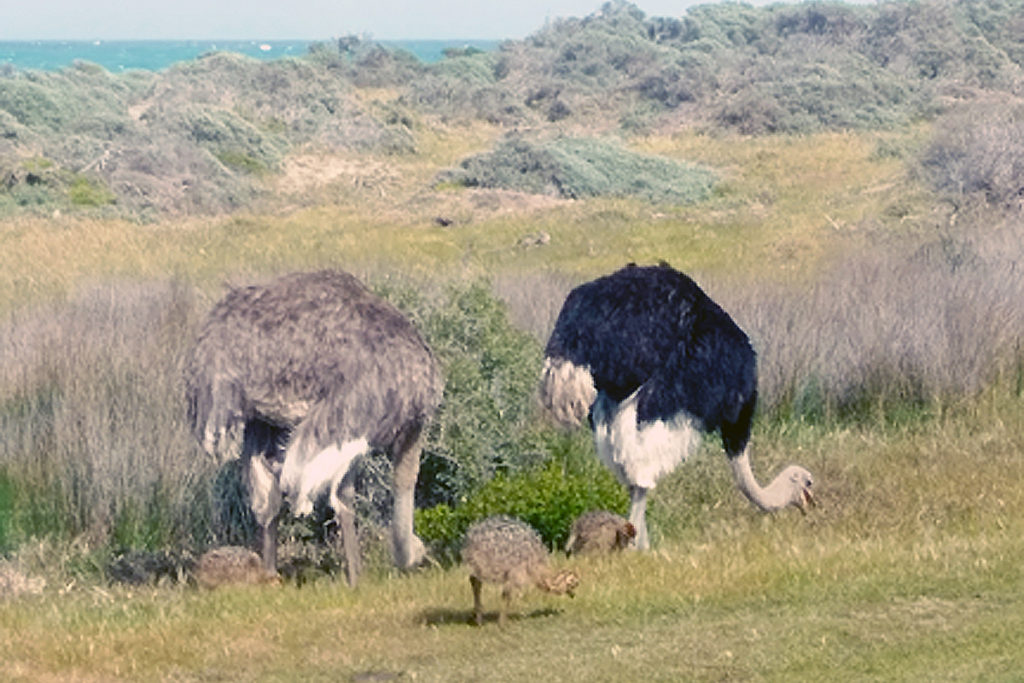
Family of ostriches near Cape Town, SA. The male is black.

Lions

We like to think of lions as big cats. That’s not wrong, but it makes them seem friendly and cuddly and safe. They deserve a fiercer characterization. They’re more like tigers without stripes. They are more like bears without fur. And with teeth. Sharp teeth.

This lion has already eaten her share of the prey. Her two co-hunters are eating, and she is the lookout.
This lioness has already eaten her share of the prey. Her two co-hunters are eating, and she is the lookout.

While we were visiting in Botswana and Namibia, we took our cameras and went out mornings and evenings. Our drivers knew the most likely spots to find the animals, and we jockeyed for position inside our oversized safari vehicles.

This lion sauntered from a sunny spot to the only available shade. The animals were aware that the vehicles were there, but they also knew we were not a source of food, so they completely ignored us.

Tourist vehicles
Tourist vehicles

In the next video, two groups of lions make sure an incoming third group respects their space. I didn’t notice the middle group until the male made his presence known partway through.

It ended peacefully. It was too hot that day to anything other than lie down, and the three groups of lions stayed away from each other. Eventually even the photographers grew disinterested, and we drove off to another site.

This lion moves toward the shade.