Apartheid: the aftermath

Apartheid is no longer the law of the land in any country in Africa. However, its aftermath is easy to see. If you’re wealthy in Africa, you’re probably white. If you’re poor and out of work in Africa, you’re probably black. But in the working/middle class, there are many signs of change.

In Swakopmund, Namibia, we had an opportunity to tour a part of the city called “the township.” Our vehicle left the tourist part of town with paved streets and well established trees. We were headed for the area where the workers lived and beyond that, to the poorest of the poor. No pavement. No trees. En route, our guide prepared us for what we would see by talking about challenges that the community faces and the infrastructure being established to deal with them.

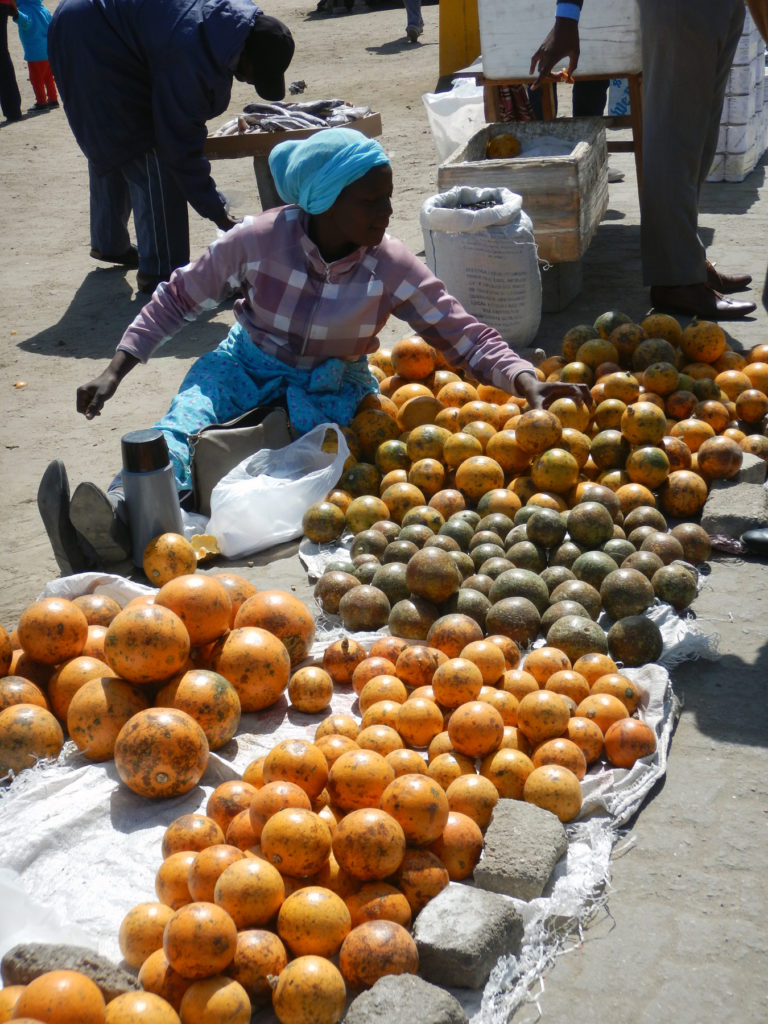
Once we were in the township, our first stop was at an open-air market. Our guide explained that both men and women were developing business skills and working to support their families.

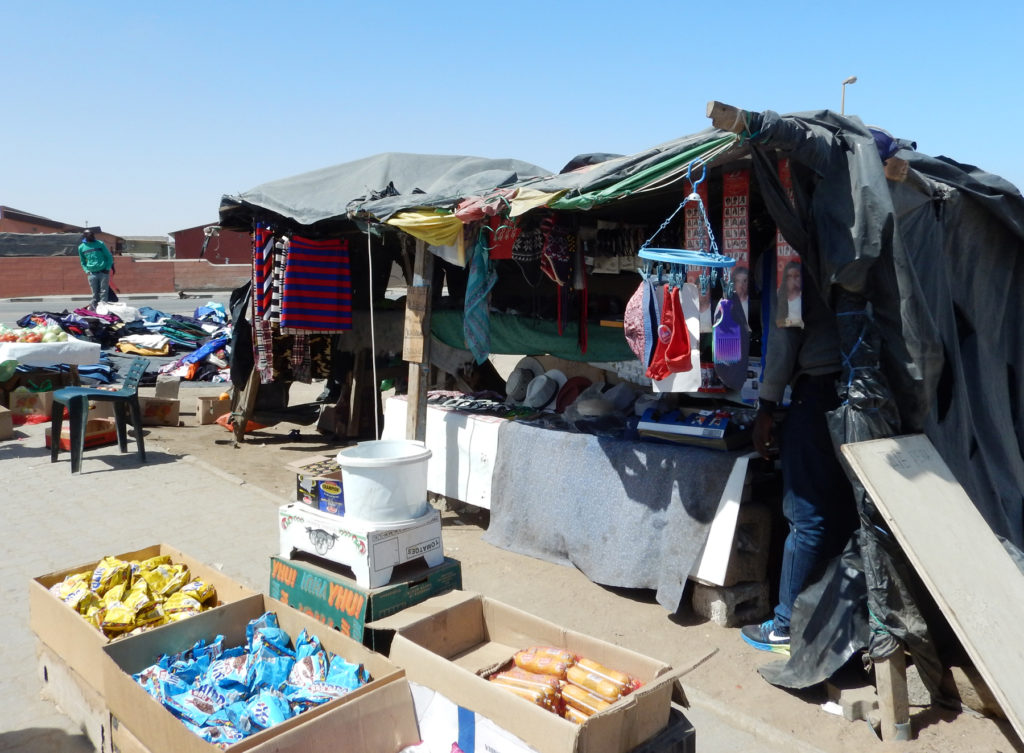
One of many open-air grocery stands. Women are learning skills to run small businesses to help support their families.
One of many open-air grocery stands. Women are learning skills to run small businesses.
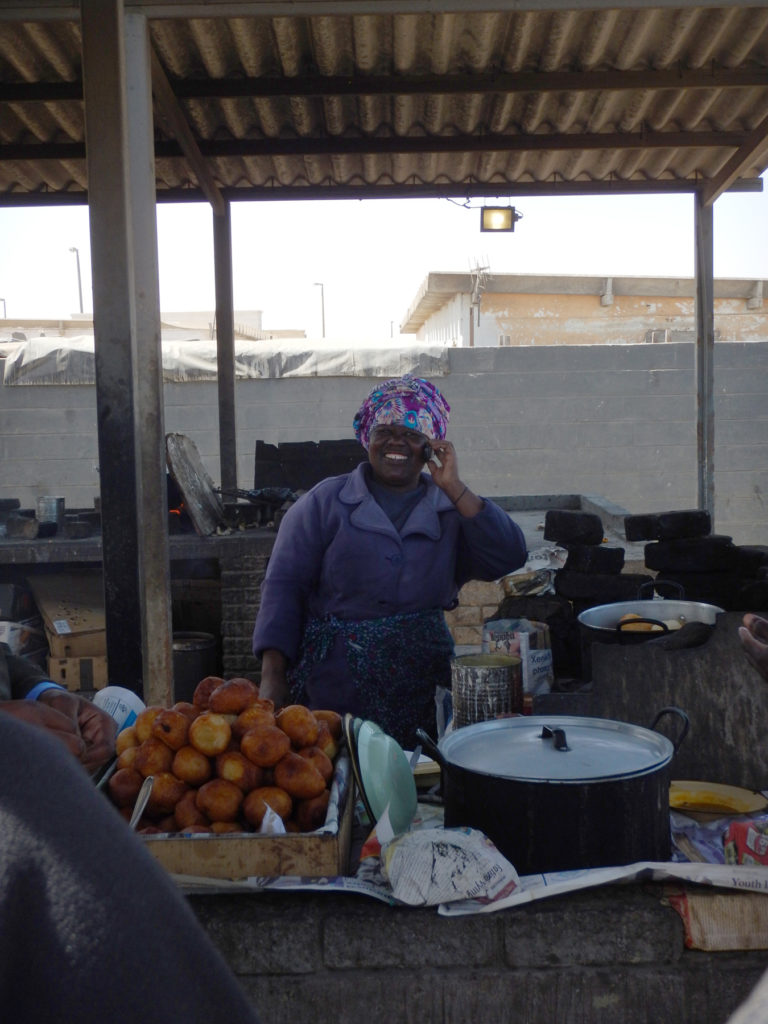
This woman makes fresh (tasty!) pastries in the market. She's talking on her cell phone.
This woman makes fresh (tasty!) pastries in the market. She’s talking on her cell phone.
The market stands provide a wide variety of goods.

Away from the market we met people whose businesses were closer to home. Every house had a certain amount of yard space. Many of the yards had small structures that served as temporary housing for another family and provided another source of income.

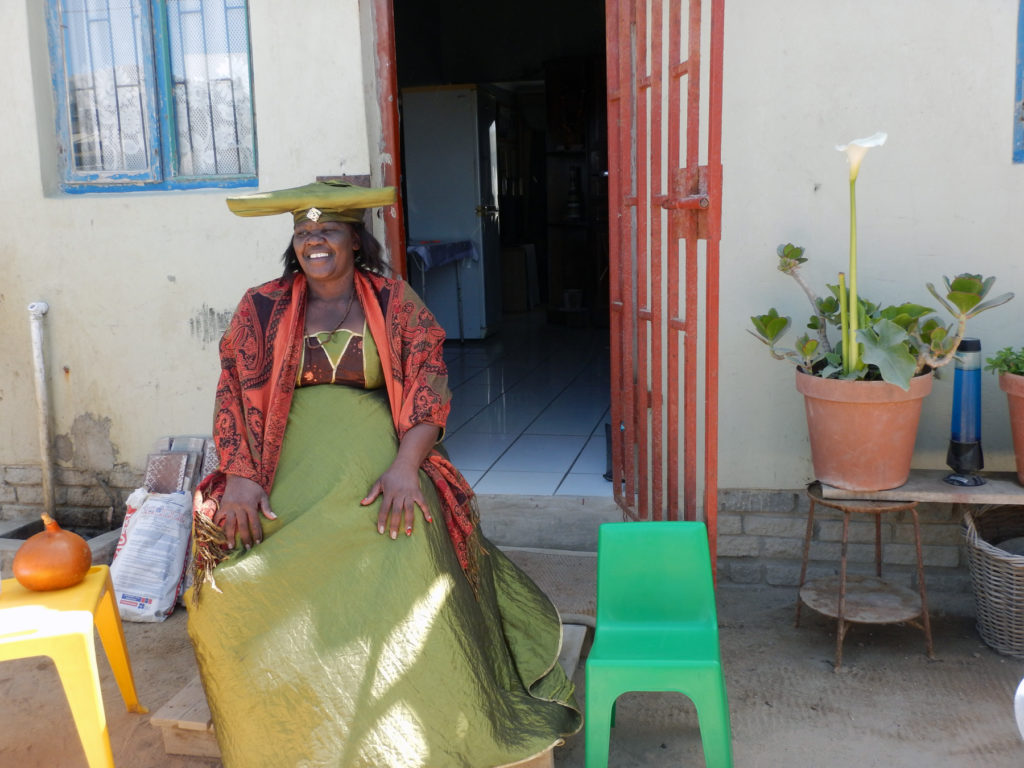
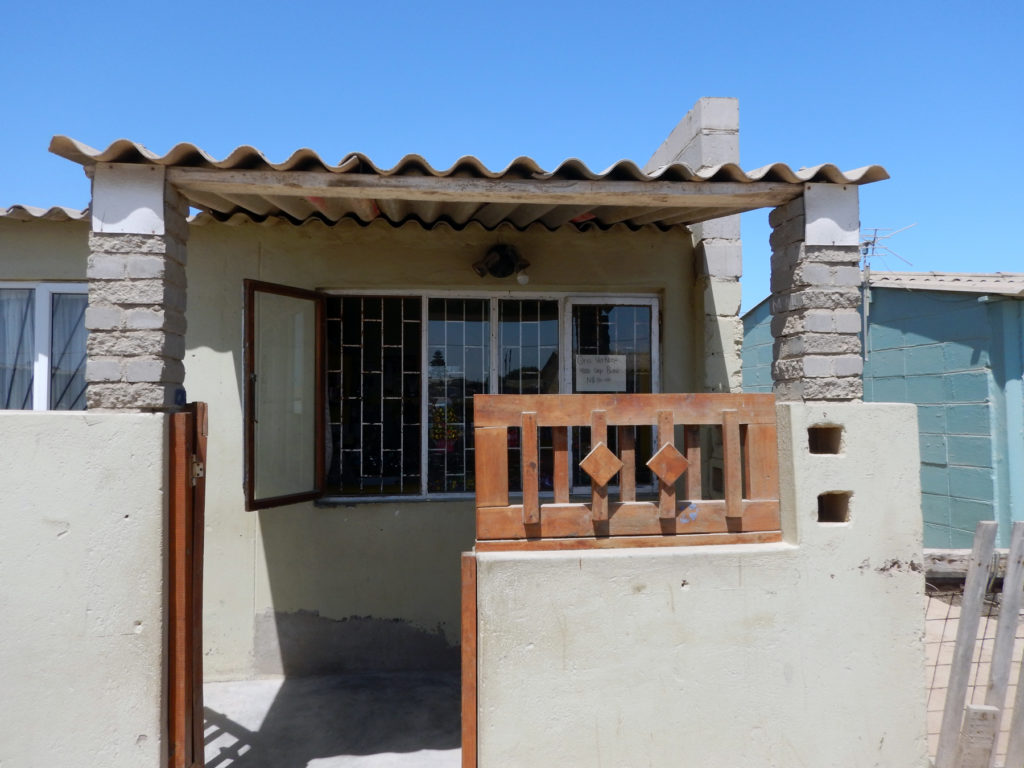
This Herera woman runs a day care center in her back yard and has a shop at the front of her home. Her daughter is finishing high school.
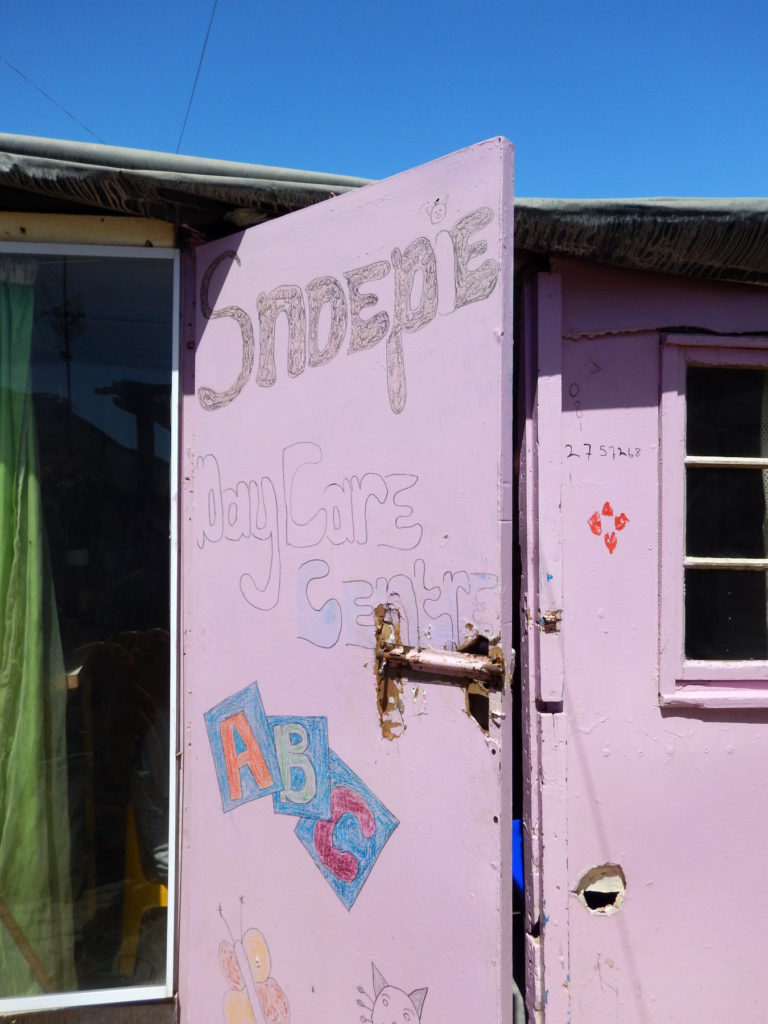
Snoepie's Day Care, a building the size of a storage shed that held about 10 preschoolers.
Snoepie’s Day Care, a building the size of a storage shed that held about 10 preschoolers.
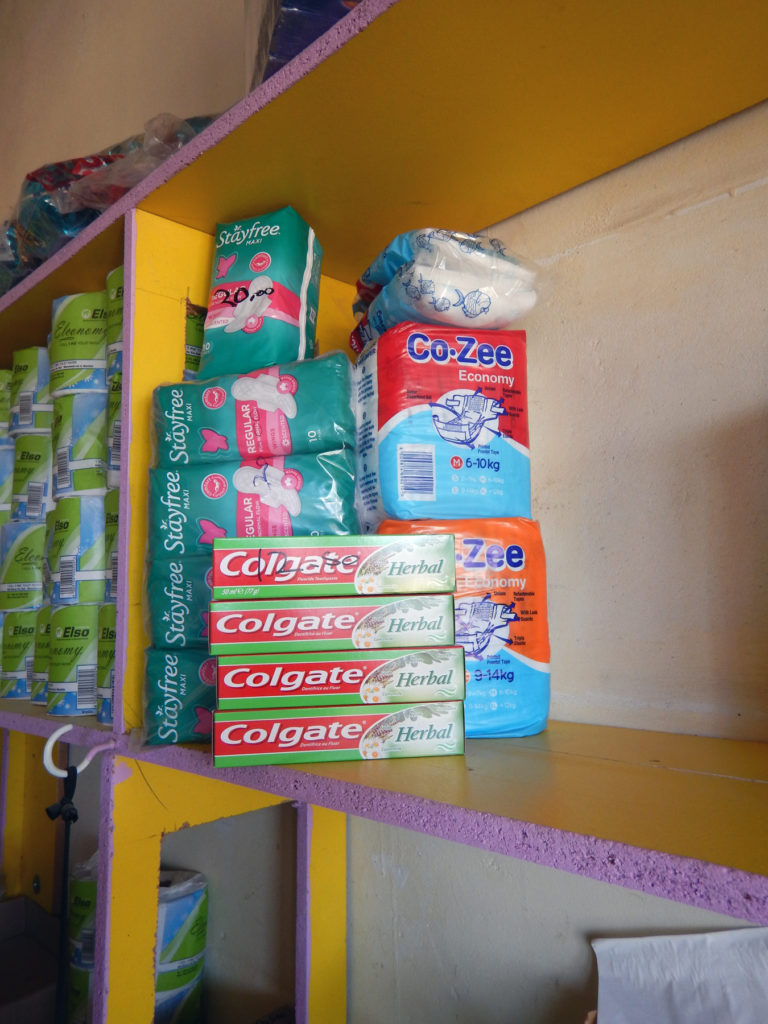
The shop at the front of the house.
The shop carries small household items.
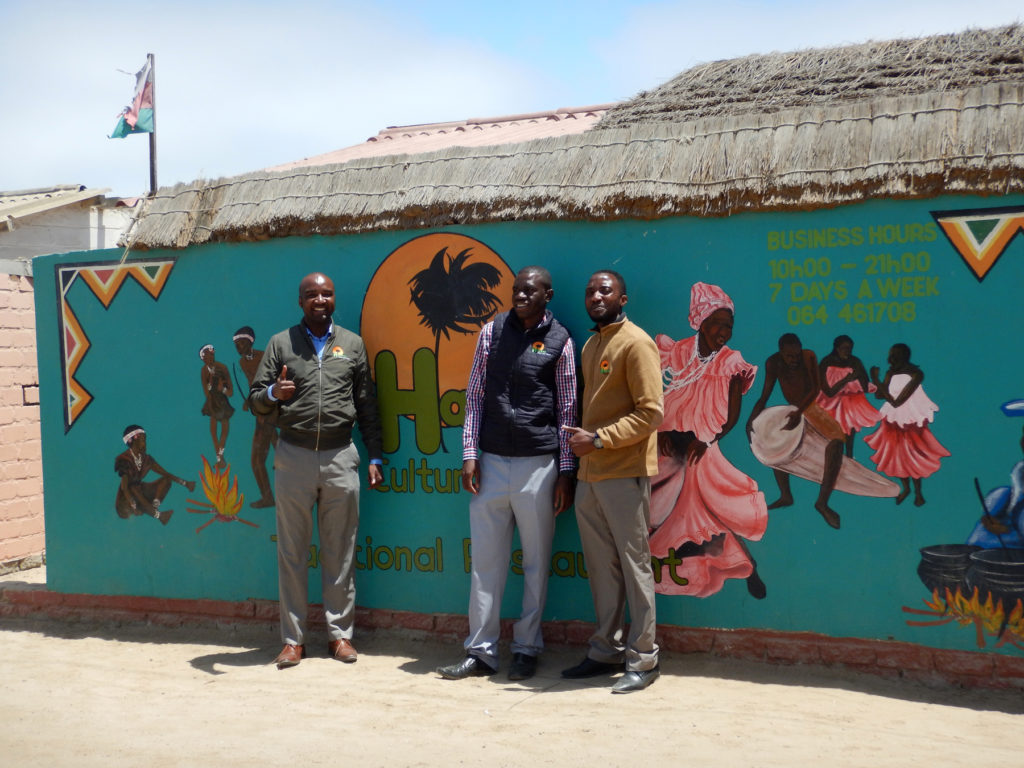
Our guide Henrich, our driver, and a guide trainee. They are standing outside the home of our guide's grandmother, a building that has been converted into a restaurant. We had lunch there.
Our guide Henrich, our driver, and a guide trainee. They are standing outside the home of our guide’s grandmother, a building that has been converted into a restaurant. We had lunch there.
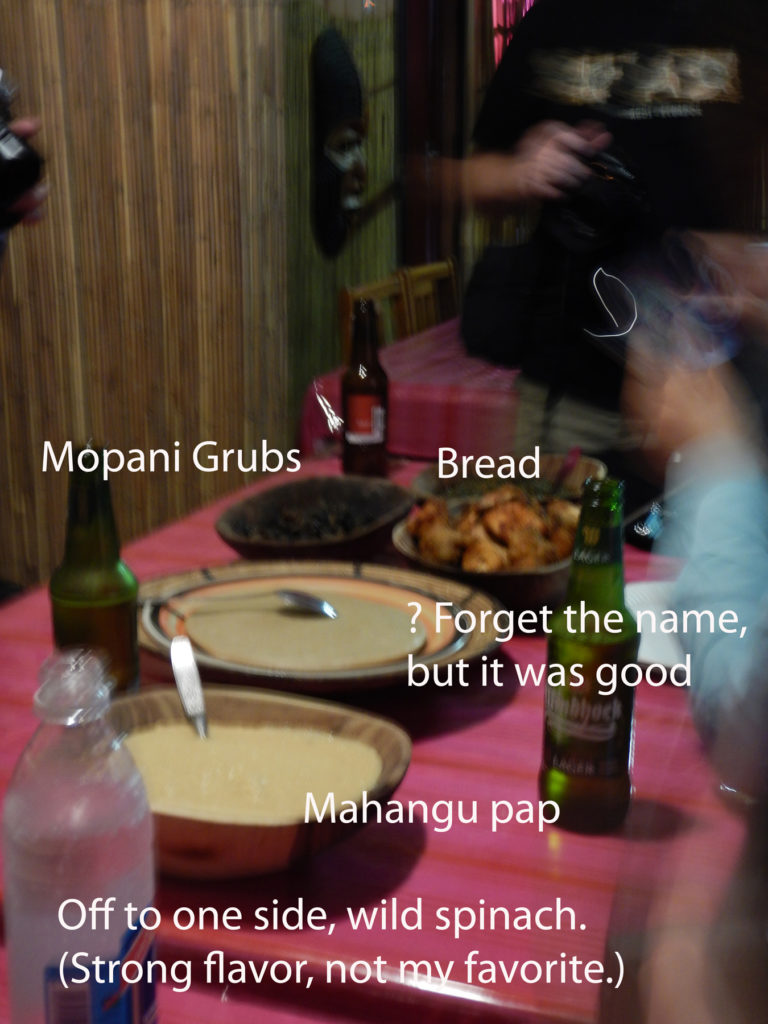
Traditional Namibian foods. The mopani grubs were chewy and bland. Everything else was good, although the wild spinach had a strong flavor.


During lunch the group African Voices sang to us. They plan to travel in Europe over the next several months.

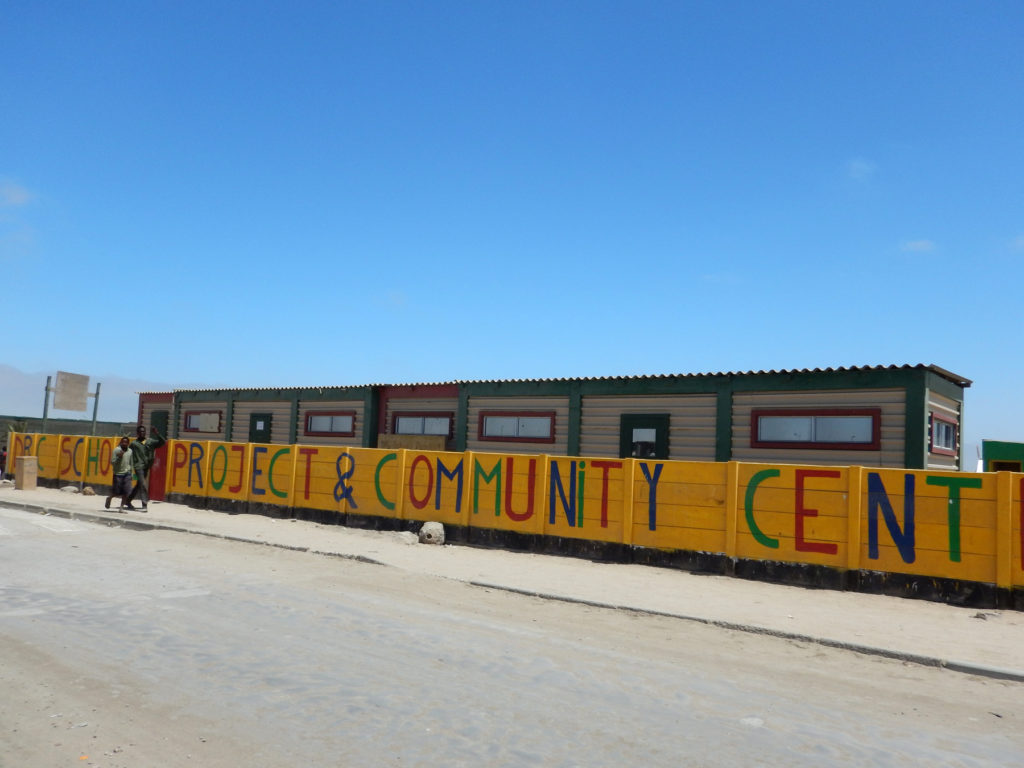
Community centers like this one provide job training, support for health care, and a safe space to meet.
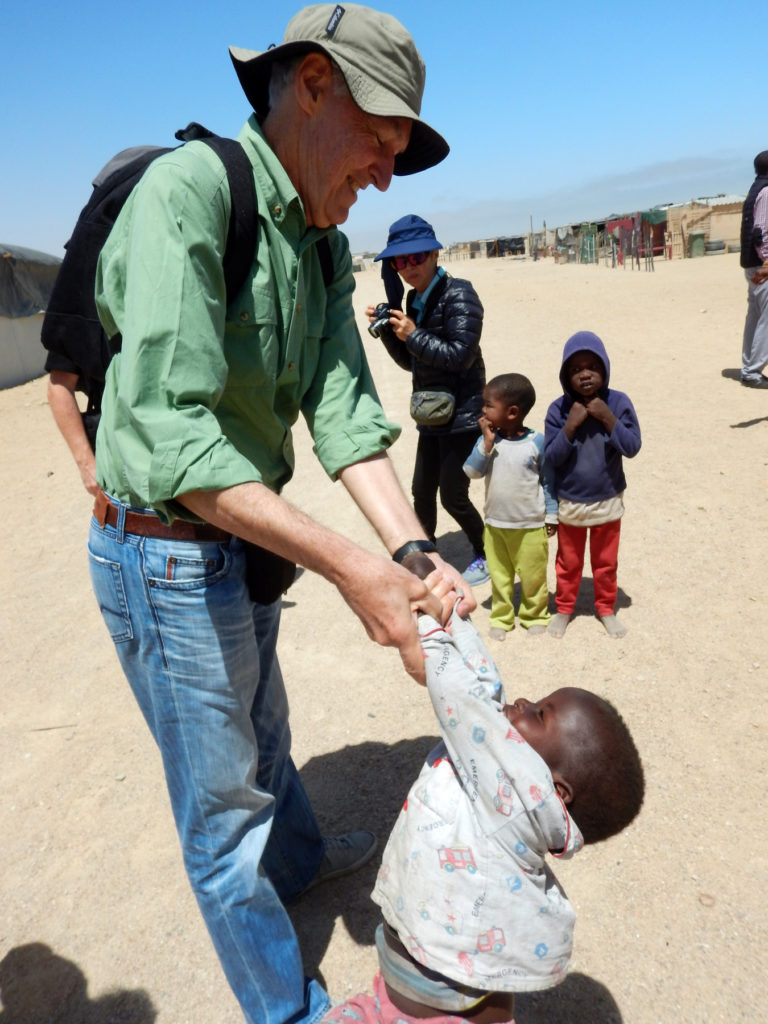
Children at a community day care center.

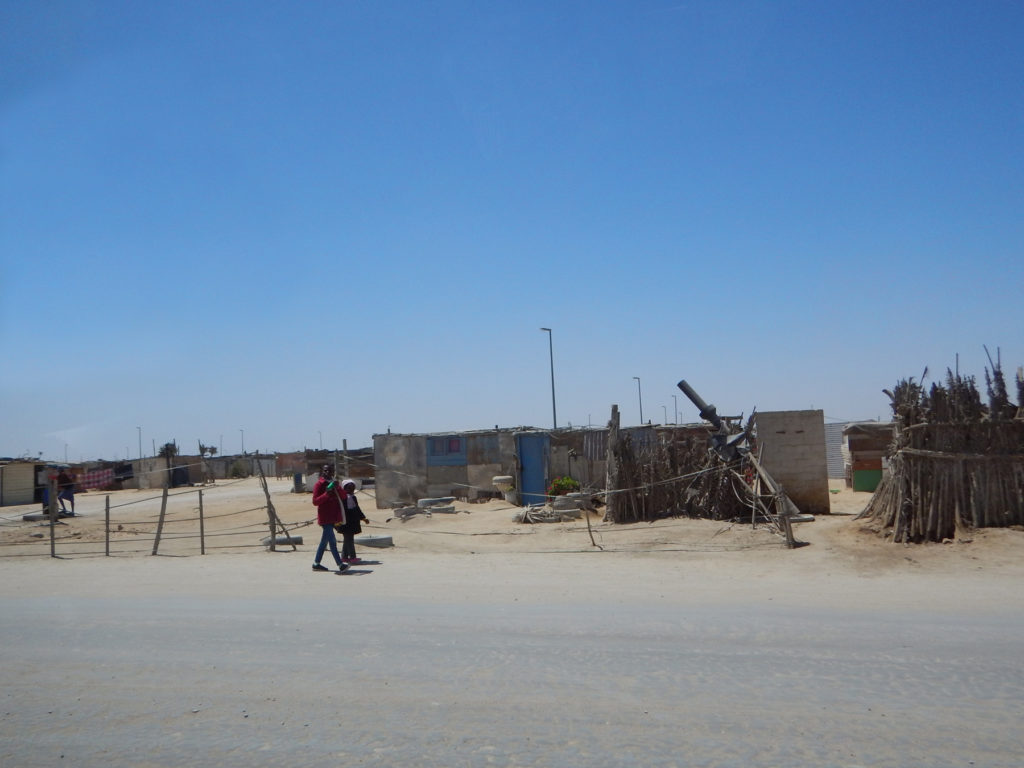
I was discouraged to see all the temporary homes built of corrugated scrap metal and any other material available, but our guide encouraged us to see hope for the future. Namibia has a national lottery that helps low income people qualify for home loans. He showed us the neighborhoods that were already platted with infrastructure for electricity and water. Permanent homes would be built there in the next few years.

Children outside temporary housing.
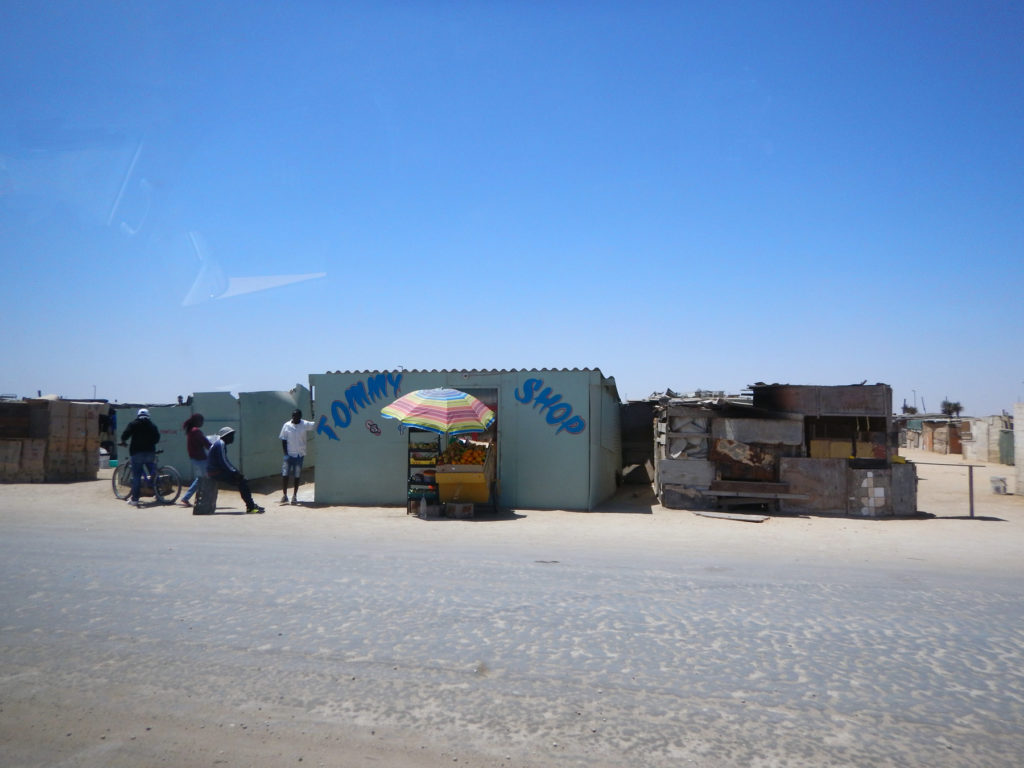
Mixed in with the homes are some shops.

In the United States we still see the impact of slavery more than 100 years after ending it. I hope that Namibia and other African nations will be more successful in bringing equality to all people in not only its legal system but also its educational and economic systems.

Lunch in the wild

Trigger warning: this blog post contains graphic photos of animals in the wild eating prey.

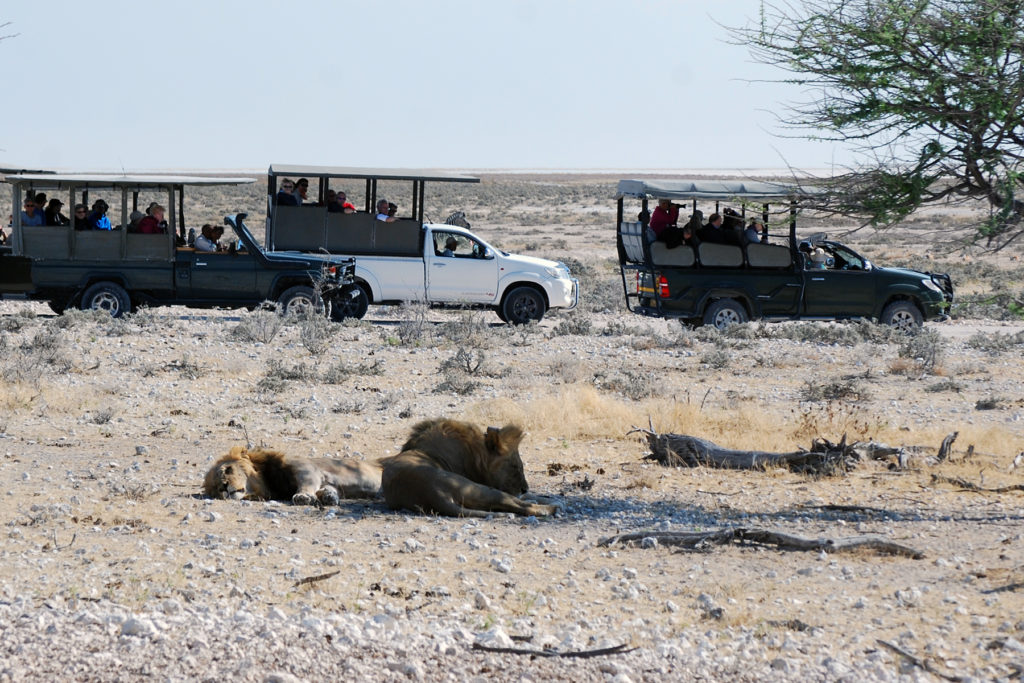
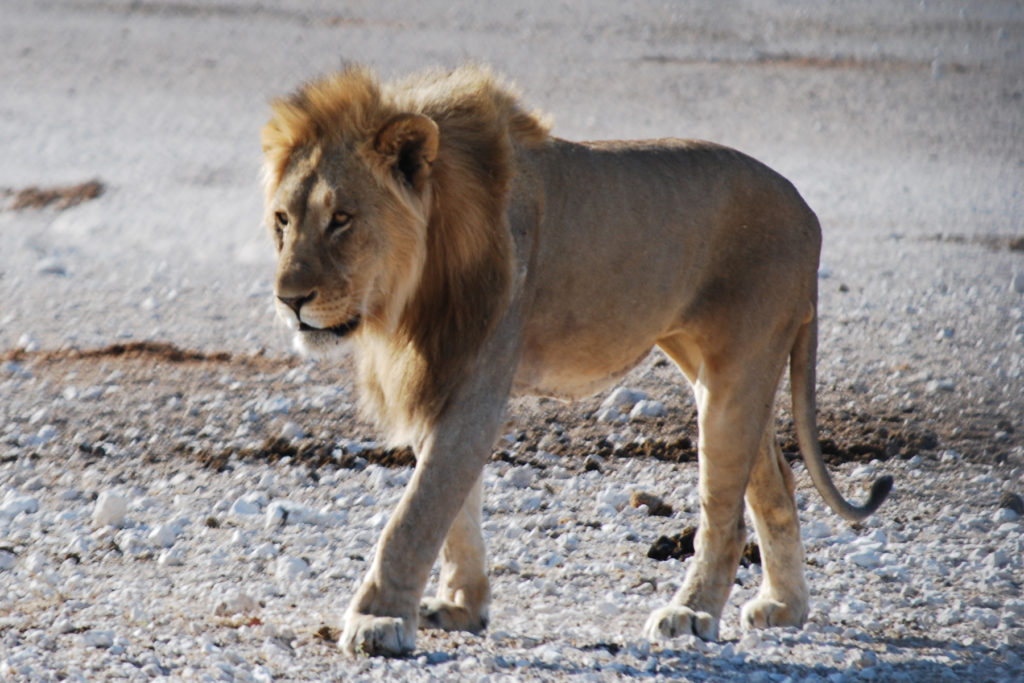
Visitors to Africa refer to searching for “The Big Five”: elephants, cape buffalo, rhinos, leopards, and lions. The term was coined by big game hunters and refers to the animals that are the most difficult to hunt on foot. Today, of course, tourists “hunt” with their cameras and use special safari vehicles. We still go looking for The Big Five, though. Additional animals, like gazelles or zebras, are a bonus.

Morning and evening game drives catch the animals at watering holes. Sometimes we find the animals eating. When it’s a giraffe nibbling on a tree or a gazelle eating a shrub, that’s one thing. Leopards and lions are different.

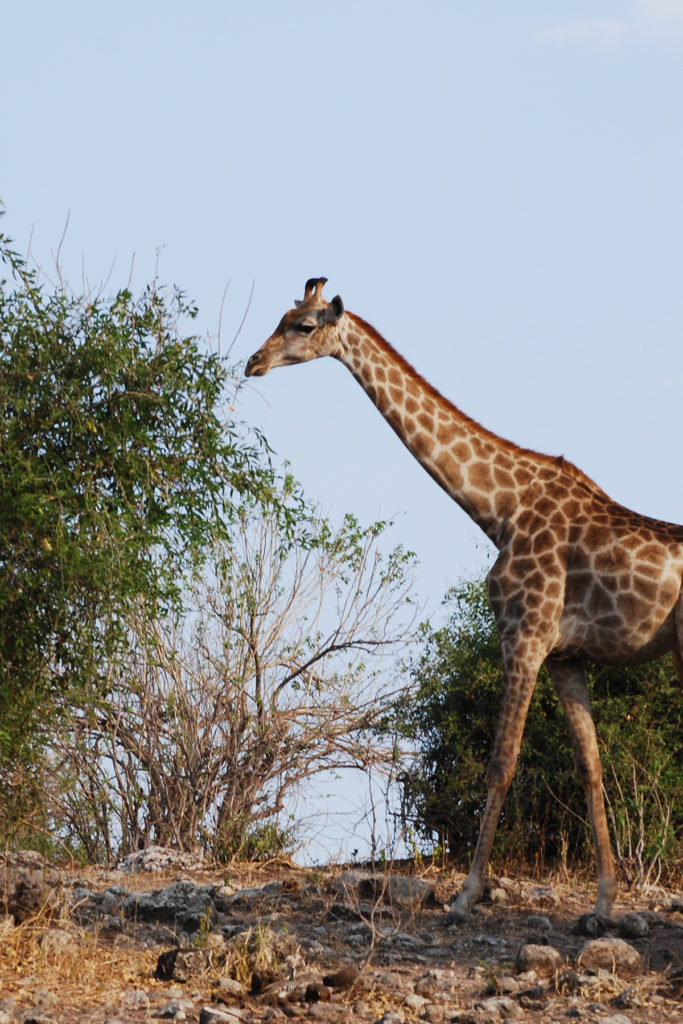
A giraffe eats leaves from the top of a tree.
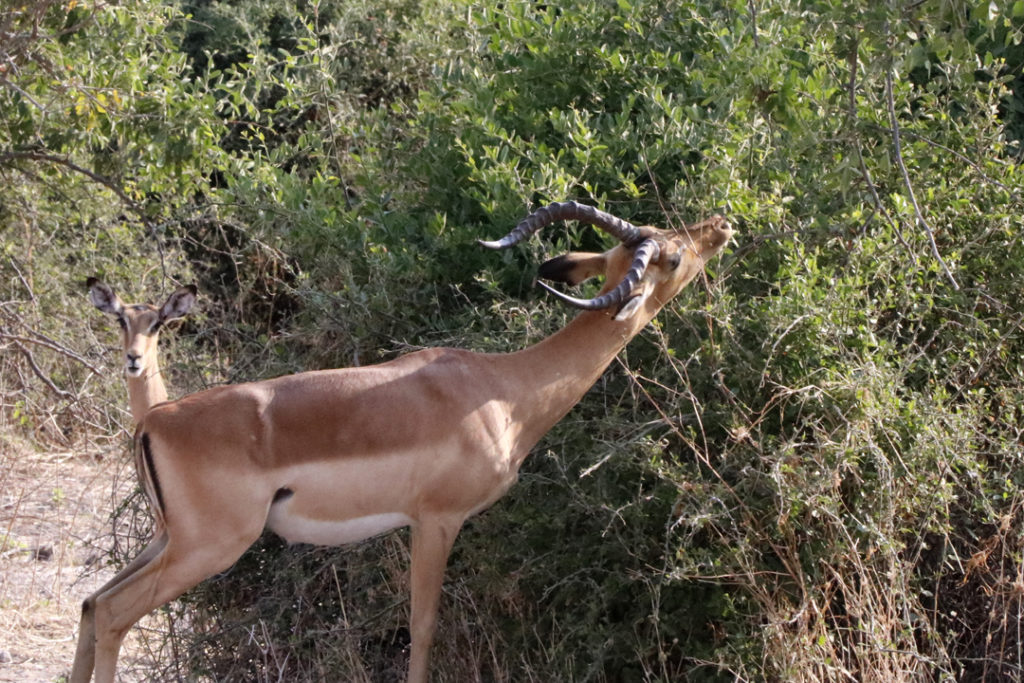
A gazelle eats leaves from a shrub.

Leopards and lions are carnivores. They don’t eat salad for lunch. They eat salad-eaters.

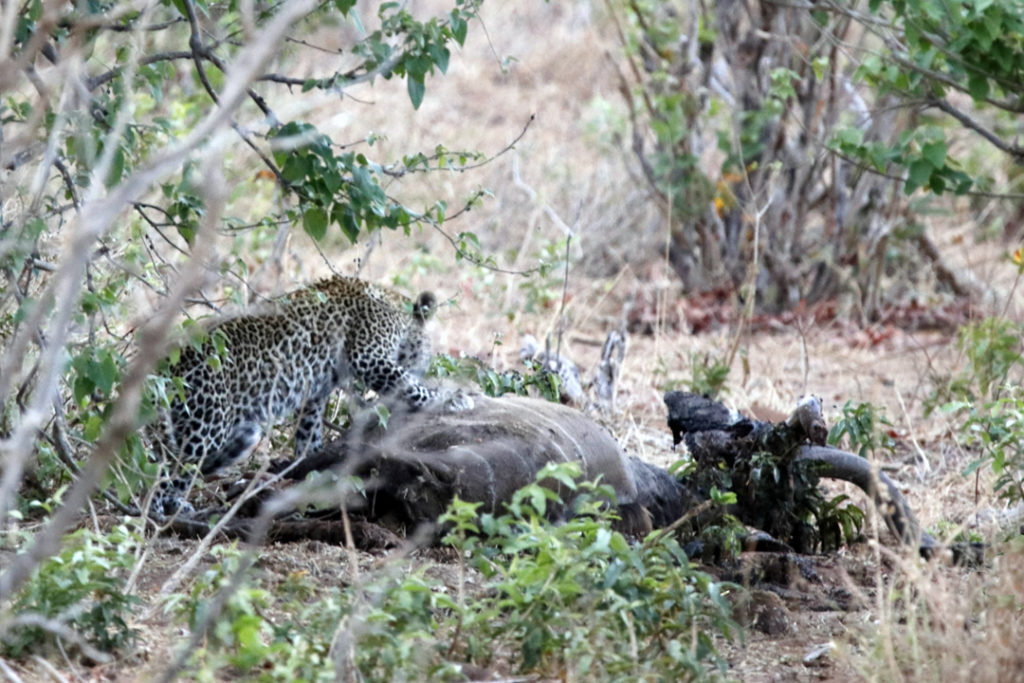
A leopard and his prey, a kudu
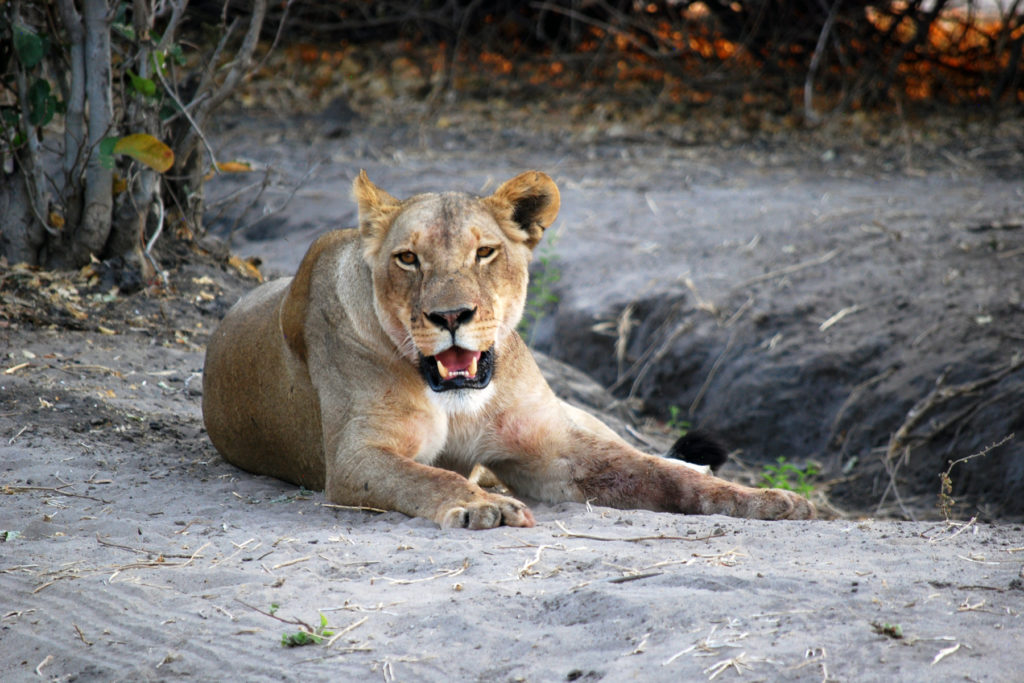
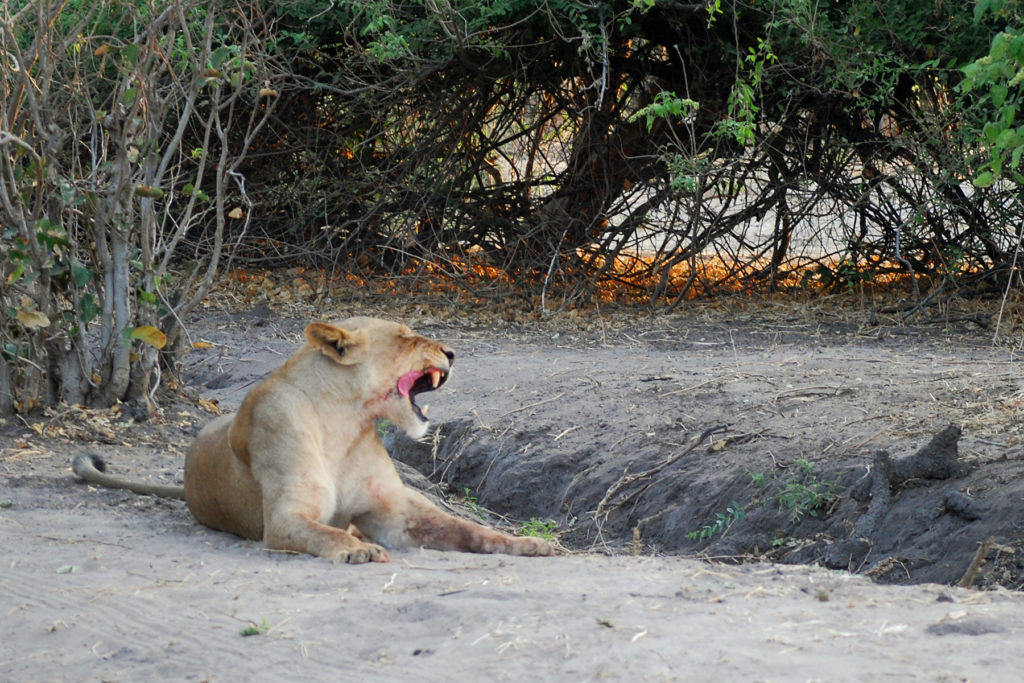
A lioness with blood on her mouth roars.
The blood on this lioness’ mouth is from a recent kill.

When we see all of these animals in action, we’re reminded of how successful food chains work. Giraffes and gazelles don’t eat so much that they kill the trees and shrubs that provide their food. Leopards and lions don’t kill more than they can eat. They prey on the weakest members of the herd, the easiest ones to take down. When they have finished eating, the carcass decomposes, fertilizing shrubs and trees. I have oversimplified, but you get the idea. Nothing is wasted.

And then the third animal in this scene, the human omnivore. We kill more than we can eat; we eat more than we need; and we waste a lot. We may be at the top of the food chain, but we have forgotten to respect it.

It’s good to be reminded of the way things should be.

Giraffes

Giraffe behind a tree

Giraffes saunter easily across the grasslands. They nibble on the tops of trees without difficulty. They move around in small groups, their long necks and long legs moving in graceful coordination, their mottled skin offering camouflage among the shrubbery. They are the picture of elegance.

Almost.

Those necks and legs get in the way when a giraffe wants something on the ground, like grass or water.

In order to reach down, a giraffe has to force its front legs far apart and stretch its neck. It looks awkward, almost painful. Sometimes it takes a couple of tries before the animal gets it right. It puts the giraffe at risk from a lion or other predator. You can almost hear it saying, “Oof!” as it gets back up.

Giraffe eating grass
Giraffe eating grass. In the background, wildebeest (gnus).
Giraffes at watering hole
Giraffes at watering hole, front legs stretched apart.

What’s true for giraffes is also true for people. Sometimes we have stretch to get something. It may be inelegant. We may feel quite awkward. But that’s what we do in order to get what we want. And then we walk away, our heads up.

Awkwardness is temporary. It’s grace we remember.

Giraffe at sundown
Giraffe at sundown, Botswana